All About Lion’s Mane

Lion’s Mane, also known as the bearded tooth fungus or Hericium erinaceus, is a remarkable mushroom that has been used in traditional medicine for centuries. In recent years, its popularity as a supplement has also grown in the Netherlands. In this blog, you will learn all about the effects and benefits of Lion's Mane, and what to consider when purchasing a Lion's Mane supplement.
Sometimes, the power of nature comes in an unexpected form, such as a mushroom that resembles a lion's mane. We are talking about Lion’s Mane, also known as the bearded tooth fungus or Hericium erinaceus. This extraordinary mushroom has been used in traditional medicine for centuries. In recent years, its popularity as a supplement has also grown in the Netherlands. In this blog, you will learn all about the effects of Lion's Mane and what to consider when purchasing a Lion's Mane supplement.
What is Lion’s Mane and where does it come from?
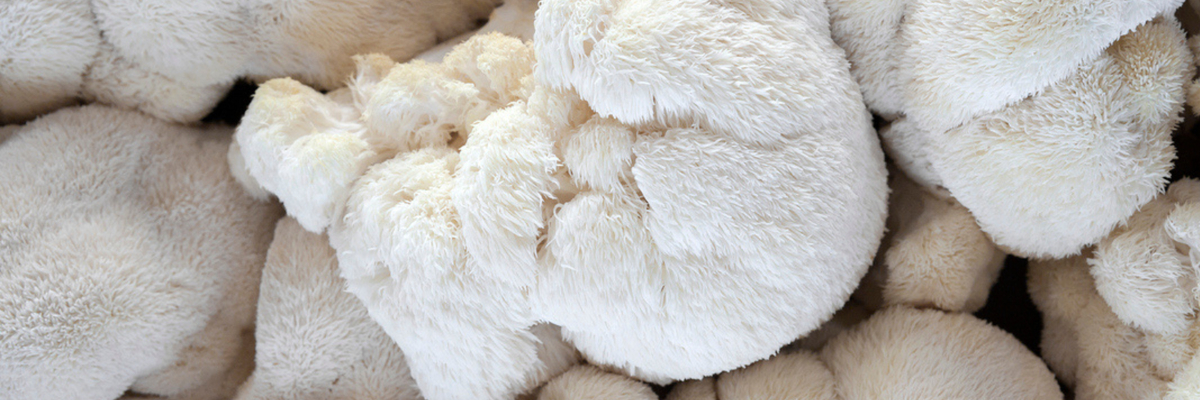
Lion’s Mane is an edible mushroom that primarily grows on deciduous trees such as beech and oak in North America, Europe, and Asia. It is easily recognisable by its long, dangling spines that resemble a lion's mane, hence the name.
This mushroom not only has a distinctive appearance but also a unique flavour – somewhat like lobster or shrimp. In the kitchen, it is sometimes used as a plant-based alternative to seafood.
However, it is primarily its traditional use that makes Lion’s Mane so special. In various Asian cultures, this parasitic fungus – meaning it lives on other organisms, such as trees – has been used as a natural remedy for centuries.
How to use Lion’s Mane?
The way you use Lion’s Mane truly makes a difference. It’s not just about what you take, but also how. Here, we explain what is convenient.
How to get started
- How much should you take? Start with a low dosage, such as 500 mg per day. You can slowly increase this to around 1000 to 3000 mg per day as needed.
- When should you take it? Many people take Lion’s Mane in the morning or early afternoon.
- Spread it throughout the day: for example, 2 or 3 times, to better distribute the effect.
- Take it with food – this is easier on your stomach.
Note: Everyone is different. Start low and increase gradually.
Is Lion’s Mane safe?
In general, Lion’s Mane is well tolerated. However, there are a few points to keep in mind:
- Stomach issues: in rare cases, with high dosages or on an empty stomach
- Allergies: individuals with a mushroom allergy may be sensitive
- Pregnancy/breastfeeding: always consult your healthcare provider if you wish to use a new supplement
- Use of medication: such as blood thinners – always consult your healthcare provider if you wish to use new supplements alongside your medication.
Always listen to your body. If something doesn’t feel right, pause use and discuss it with one of our health coaches or your healthcare provider.
Buying Lion’s Mane? Here’s what to consider
Do you want to add Lion’s Mane to your routine? Then quality is key. When choosing a supplement, pay attention to the following:
- Is it clearly stated which part of the mushroom is used? (Fruit body and/or mycelium)
- Are there unnecessary additives such as fillers or artificial flavours? If not: excellent!
- Is it an organically or sustainably grown mushroom?
- Brand transparency: choose a producer who is open about origin and content
This way, you can be sure you are choosing a product that suits you and delivers on its promises.
Good to know
Lion’s Mane is a remarkable natural product with a rich history and plenty of potential. Furthermore, Lion’s Mane has been part of traditional healing practices for centuries and is valued and used worldwide, both in the kitchen and as a supplement. Note: this article is informative but in no way a substitute for medical advice.
Sources
- PubMed. (2021). Lion’s Mane and NGF stimulation. https://pubmed.ncbi.nlm.nih.gov/33800983/
- Examine.com. (n.d.). Lion’s Mane Mushroom (Hericium erinaceus).
- Naturecan. (2023). What is Lion’s Mane and what are its potential benefits?
- Daba, A. & Ezeronye, O. (2003). Polysaccharides from Hericium erinaceus and immunomodulation. African Journal of Biotechnology, 2(12), 672–678.